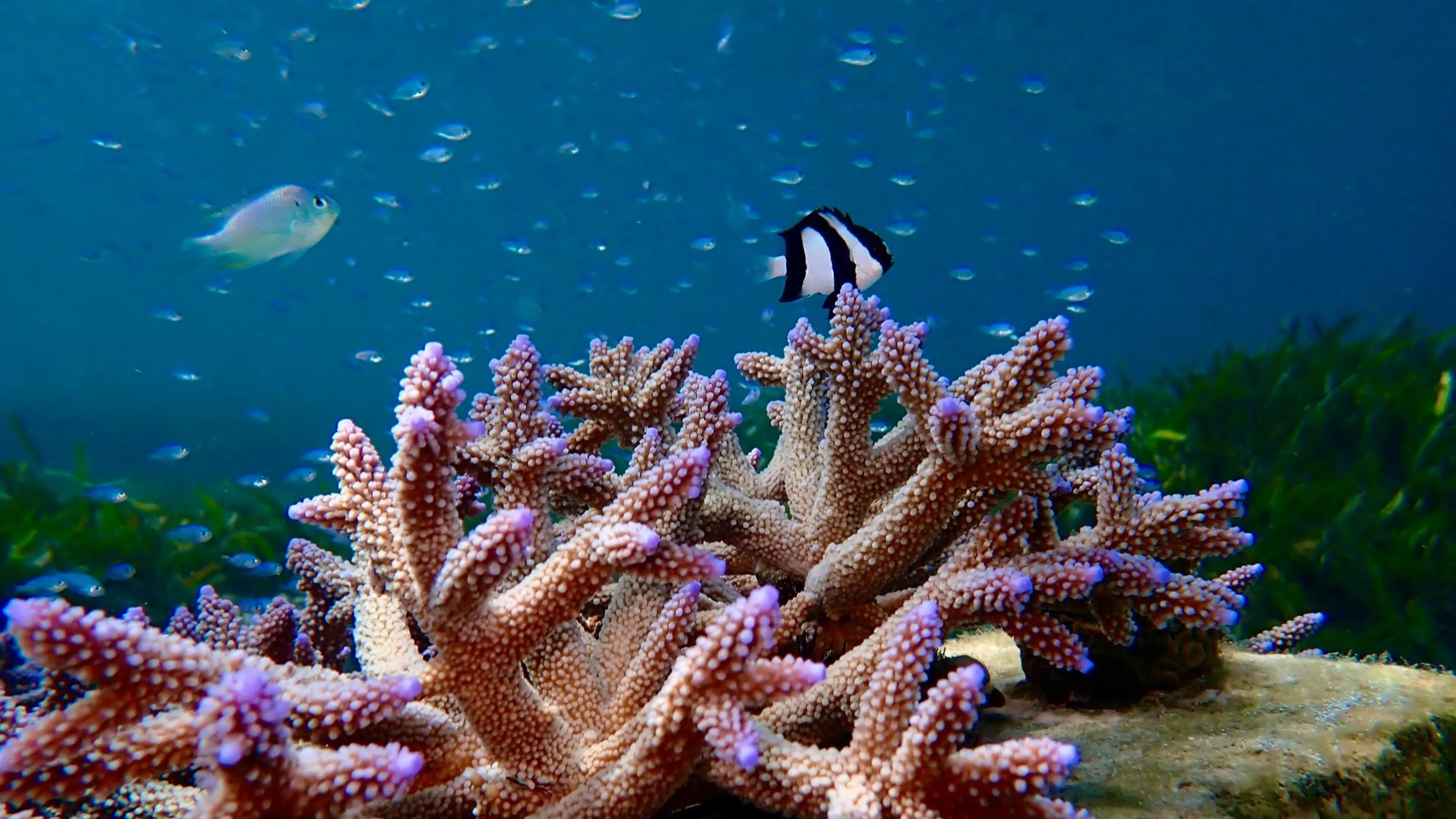
Coral reef ecosystem recovery
Info
Purchase type
By funding this project you are contributing to their work. You will receive impact reports and measurements but you won't receive a carbon credit.
Categories
Background
Globally,coral reefs provide a habitat for 25% of marine biodiversity. Over the last three decades, rising sea temperatures have devastated between 50-90% of the coral along Kenya’s coast.This has severely impacting traditional fishing livelihoods. In response, Oceans Alive is working with local communities to protect and restore these ecosystems. In community led marine closures, fish biomass has increased by 400% and coral regrowth by 30%. These thriving marine protected areas has sparked eco-tourism, providing a sustainable source of income for the community.
Why did we choose this project?
Coral reefs are not just diverse ecosystems, they are crucial to the survival of many coastal communities. Kenyan coral ecosystems provides food and income for over 90% of those living along the coast. These traditional livelihoods are under threat due to over-exploitation, illegal fishing gears and climate change. By supporting Oceans Alive, Pinwheel's clients are investing in a project that addresses these critical challenges. Through community-driven action, this project will restore coral reefs and strengthen the resilience of the people who depend on them.
How does it work?
Coral ecosystems are restored by using artificial reefs, coral planting, and marine closures. The reef structures are placed in intertidal zones where fishing is prohibited, allowing natural recovery. Coral fragments from nurseries are then planted onto these reefs, creating vibrant ecosystems that act as nurseries for fish. Within these restored areas, fish grow to breeding size before migrating to surrounding regions, replenishing fish stocks. Community members are actively involved in each stage, from project design to ongoing monitoring.
How do we know it's working?
The success of Oceans Alive is evident through tangible results and a thriving ecosystem. Their innovative techniques has dramatically improved the economics, reducing the cost of coral outplanting 10 fold. This cost reduction makes the reef fisheries restoration more accessible for local community adoption and replication, ensuring broader impact and sustainability. Regular monitoring reports confirms that their work is having a tangible impact. The reefs are gradually recovering, demonstrating the project’s success.
Star fact
More than one third of all coral reefs have been damaged or destroyed worldwide. This has heavily impacted the thousands of species that inhabit these coral reefs and the community livelihoods which rely on them.
UN Sustainability Goals


Verified by Pinwheel
30 Sept 2024
Location
Kilifi county, Kenya